
U.N. Side Event Highlights Systematic Religious Persecution and Forced Organ Harvesting in China

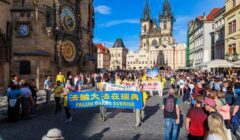
Freedom of Religion and Belief in China, side event during the 59th session of the United Nations Human Rights Council on June 16 (NTDTV.com/Edited by Faluninfo)
Geneva, June 16, 2025 — A high-profile side event held during the 59th session of the United Nations Human Rights Council cast renewed international attention on the Chinese Communist Party’s (CCP) systematic persecution of religious groups—particularly the violent repression of Falun Gong practitioners and the ongoing practice of forced organ harvesting.
Hosted in Room XXV of the Palais des Nations by Citoyen en action pour la démocratie et le développement (CADD) and Global Human Rights Defence (GHRD), two Europe-based NGOs, the event titled “Freedom of Religion and Belief in China” featured compelling testimonies from survivors, medical experts, and international human rights advocates. Speakers condemned what they described as a decades-long campaign of torture, indoctrination, and extrajudicial organ harvesting targeting spiritual communities in China..
Survivor testimony
One of the most harrowing accounts came from Ms. Yumei Liu, a Falun Gong practitioner originally from Liaoning Province. Between 1999 and 2005, Ms. Liu was imprisoned nine times, subjected to over 40 forms of torture, and repeatedly threatened with organ harvesting.
In one incident in 2000, after traveling to Beijing to appeal for her faith, she was abducted by police. “If you don’t give your name and address, we’ll harvest your heart and liver,” an officer told her. “Your family will never find your body,” she recalled.
Ms. Liu’s husband—isolated and terrified by state surveillance—died prematurely, and her sister was tortured to death in 2002. Now living in Finland, Ms. Liu continues to experience transnational harassment, including surveillance and intimidation near the Chinese Embassy in Helsinki.
Medical expert analysis
Joining via video, Dr. Andreas Weber, deputy director at Doctors Against Forced Organ Harvesting (DAFOH) and a former organ transplant specialist in Germany, delivered a sobering assessment of China’s state-orchestrated organ trade. He accused the CCP of operating a “cold genocide” under the guise of medical advancement. “Cold genocide” is threefold. In the case of Falun Gong, the multidimensional aspect is meant to destroy Falun Gong practitioners not only physically but also psychologically, socially, and spiritually. This genocide is also subtle in terms of visibility and finally it is normalized in the society in which it takes place.
Dr. Weber presented decades of compiled evidence, including undercover calls to Chinese hospitals and documented victim testimonies. He referenced the 2019 judgment of the China Tribunal—an independent people’s tribunal chaired by Sir Geoffrey Nice KC—which concluded that forced organ harvesting in China had occurred “beyond reasonable doubt,” with Falun Gong practitioners being the primary victims.
DAFOH’s data reveals that since the crackdown on Falun Gong began in 1999, China’s transplant infrastructure has expanded dramatically—from 150 hospitals to more than 600 within seven years. Between 2000 and 2004, transplant volumes surged by 250%, compared to a global increase of only 10–15%. These numbers in China simply don’t align with any legitimate, voluntary donation system.
“Twenty-five years of torture, brainwashing, and forced organ harvesting is more than a human rights abuse—it has taken on the signs of a cold genocide,” Mr. Weber warned. “The mission of the United Nations Human Rights Council is to promote and protect human rights worldwide. Why does the council seem to forget about its mission when it touches on the border of the People’s Republic of China in these cases?”
Advocacy and policy perspectives
KaYan Wong, a Falun Gong practitioner raised in the Netherlands, spoke about the spiritual practice’s roots in Buddhist traditions and the CCP’s efforts to eliminate it. “Falun Gong promotes truthfulness, compassion, and forbearance—values seen by the regime as a threat,” she said. Ms. Wong recounted how, by 1998, the practice had over 70 million adherents—more than the number of CCP members at the time. In response, then-leader Jiang Zemin ordered a campaign to “defame their reputation, bankrupt them financially, and destroy them physically.”
Mr. ManYan Ng, a board member of the International Society for Human Rights, emphasized how the CCP’s transnational repression extends far beyond China’s borders. He described espionage networks, digital surveillance, and infiltration of Western media. “The CCP has a global strategy. Their goal is world hegemony,” Ng warned. He praised bipartisan support in the U.S. for legislation such as the Falun Gong Protection Act, urging Europe to take similar action.
The event concluded with calls for greater transparency in China’s transplant system, independent investigations, and increased international pressure for accountability. Panelists urged the Human Rights Council to act decisively to protect freedom of belief and end the atrocities.